Berghs AI Unconference, what is it about?

What are the topics and questions buzzing around AI? What keeps you up at night? Are there signals you might miss? On October 7 in Berlin we will open the door to creatives, leaders, designers and techies to share their views on AI today. It's an afternoon you shouldn't miss if you are in Berlin. I asked the contributing speakers what they will bring and what they are looking forward to:

Mike John Otto argues in his session that brands only earn a place in culture through emotional impact — not messaging. In Narrative Experiences in the Age of AI (20 min), he explores how art- and culture-driven creativity can work with AI rather than around it.
Why should we come and listen to your talk?
Because we are entering a moment where creating images has never been easier, but creating images that actually stay with us is becoming harder.
My talk looks at the power of the image in the age of AI, and at how we can build narrative experiences that create emotion, curiosity and memory rather than simply more content. I’ll share how I combine strategic thinking, visual storytelling and artistic practice to create worlds people want to enter, explore and remember.
What are you curious about in the other talks/workshops that you want to explore?
I’m curious about how others are responding to the same fundamental shift from very different perspectives. What happens to creativity when tools, processes and possibilities change this quickly?
I’m especially interested in where people see new forms of authorship interaction and storytelling emerging and what might become possible when we stop treating AI simply as a production tool. For me one of the most interesting shifts is how it allows us to explore more possibilities much earlier in a project compare different directions quickly and make more informed creative choices before committing to one path.
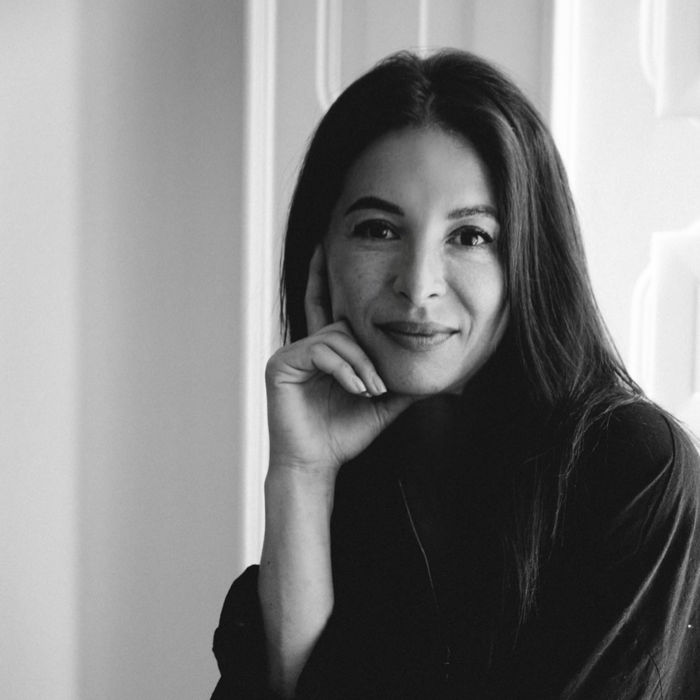
Julia Wysokowsky explores why some of our hardest decisions remain difficult even when AI gives us more information, analysis and options than ever before. Through a relatable leadership case, she shows how our own emotions, defences and recurring patterns can quietly shape judgement — and offers a practical framework for seeing them more clearly.
Why should we come and listen to your talk?
AI can give us more information, more options and better analysis, but that doesn’t automatically make us better decision-makers. In The Human Blind Spot, I’ll bring a psychodynamic perspective to the human side of decision-making: how assumptions, pressure and relational dynamics can quietly shape what we see and what we choose, and how we can make some of those blind spots more visible by looking at ourselves more closely.
What are you curious about in the other talks/workshops that you want to explore?
I’m really curious about 100 Ideas in 3 Seconds. None of Them Are Any Good because it sounds like the perfect AI-age problem: endless possibilities, but which ones are actually worth anything? I’m also looking forward to Design for Contribution: AI Adoption That Sticks and AI & Future of Work in Customer Experience. I’m especially interested in what happens when AI meets real people, real teams and real work, because that’s usually where things get interesting.

Esh Loh explores what happens to human attention and presence as AI expands what we can know, create and automate. Through an experiential workshop using music, breath, movement and deep listening, he invites us to consider a fundamental question: as our machines become more intelligent, can we become more conscious of what it means to be human?
Why should we attend your workshop?
Beneath our climate, social and technological crises may lie a deeper one, a crisis of attention and consciousness. AI can process information for us, but it cannot decide what deserves our attention or become present on our behalf. In this workshop, we explore a collective resonance experience and an invitation to ask a defining question of the AI era:
Can we become more conscious, and what does it mean to be human?
What are you curious about in the other talks/workshops that you want to explore?
I'm especially curious about how other speakers are approaching the human side of AI, not just what it can automate, but what it asks of us. Ava de Pol's talk on AI and the future of work in customer experience looks particularly interesting to me, since customer experience is ultimately about presence and connection, the same territory my workshop explores from an embodied angle. I'd love to see where the more strategic, business focused conversations meet the deeper questions about attention, meaning and what stays uniquely human as our tools get smarter.
Teodora Tzankova
Neuroflexibility as a Key Capability: Empowering Leaders and Teams to Navigate Complexity and Uncertainty
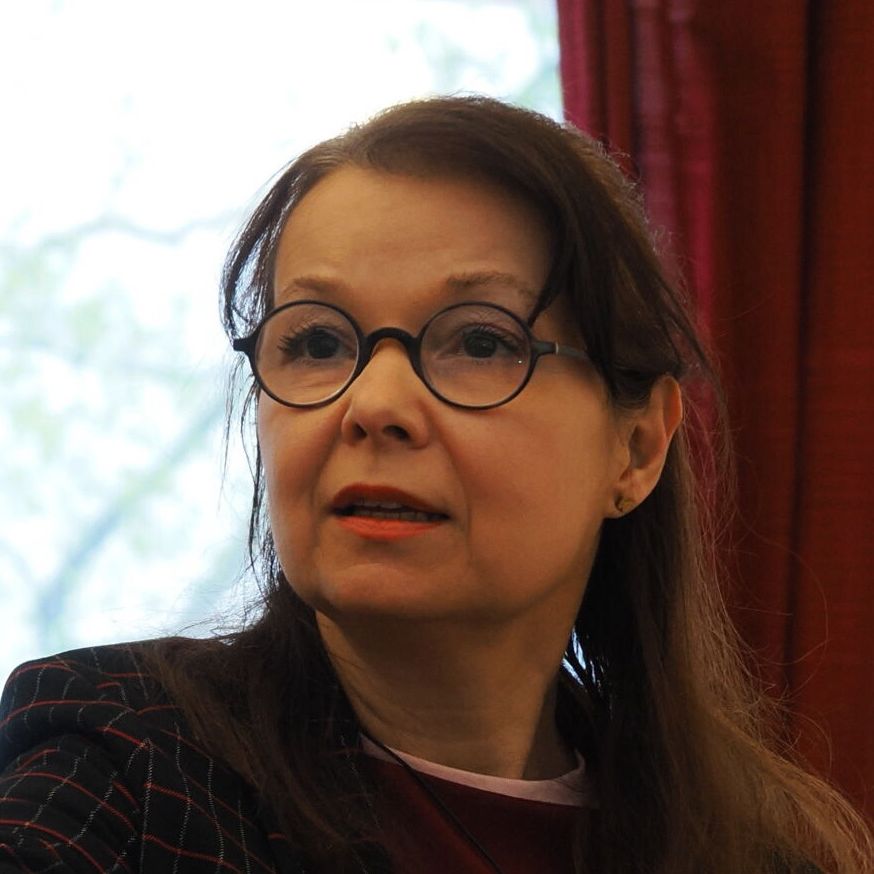
Teodora Tzankova explores the skills leaders need to navigate an unpredictable, non-linear AI world. Through hands-on improv exercises, she invites participants to practice staying present, adapting to the unexpected, and letting go of fixed assumptions — building the neuroflexibility to respond creatively when the ability to adapt matters more than the ability to know.
Why should we attend your workshop?
What are you curious about in the other talks/workshops that you want to explore?
I’m curious about how creativity, human judgment and responsibility evolve in an AI-driven world. For example, I’d love to explore how art- and culture-driven creativity can work with AI (Mike John Otto, Narrative Experiences in the Age of AI), what human skills make AI truly useful without handing over the wheel (Ulrike Kerber, 100 Ideas in 3 Seconds. None of Them Are Any Good), and especially how responsibility and human flourishing can shape education after AI (Professor Christo Kaftandjiev, The Creative University After AI).
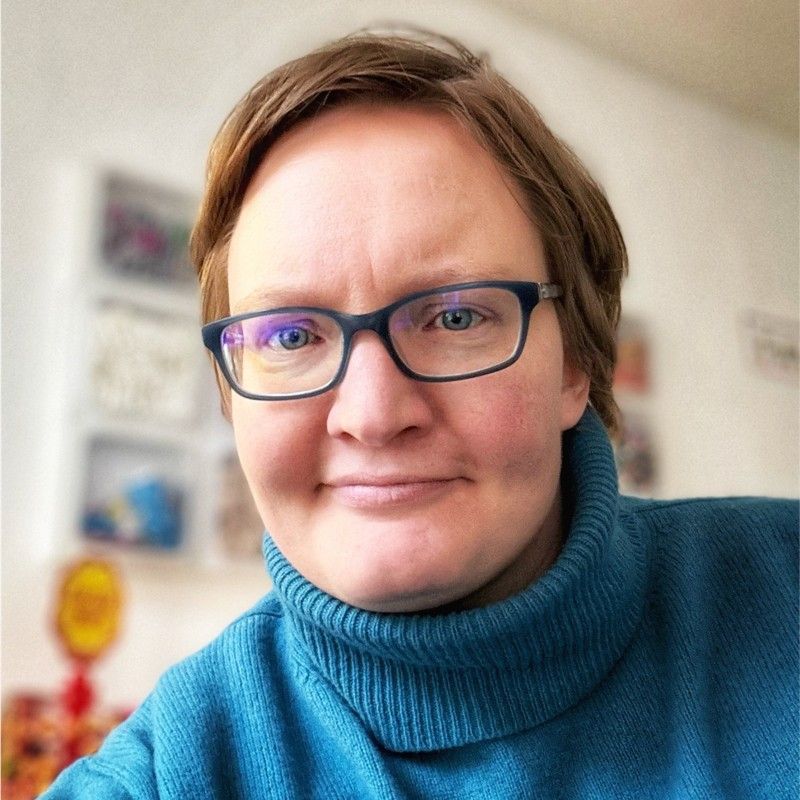
Yvonne Pöppelbaum discusses how research shows identical AI-assisted work read as "initiative" when it's a man's, and "inability" when it's a woman's. Her talk, Ladies! How to Take Credit for Your AI-Assisted Work (20 min), offers five concrete language swaps for the next morning. She follows it with a workshop, Design for Contribution: AI Adoption That Sticks (40 min), tackling the more common failure of AI training — tool demos and prompt libraries that produce spectators instead of practitioners.
Why should we attend your workshop?
My talk is for every woman who has ever hesitated to say "I used AI for this." You will leave with language swaps you can use the very next morning. Why does that matter? Because the same AI-assisted work gets read as "initiative" when a man did it and as "inability" when a woman did it. That is not a feeling, it is a measured result.
Workshop:
No demos, no spectators: you build. Come if you want to leave with a ready-to-run opening sequence for your next AI meeting or training. Designed to get AI adoption right, and to make people want to contribute. No tech skills needed.
What are you curious about in the other talks/workshops that you want to explore?
I am curious to see how philosophy can advise us on which interactions we should never hand over to AI. Wiebke Apitzsch's point that the seemingly inefficient moments are exactly what builds trust resonates with my own work on keeping human judgment visible. And I really want to experience Teodora Tzankova's improv workshop: her idea that the ability to adapt may matter more than the ability to know is the embodied version of what I teach. Also, as a facilitator, I am always on the hunt for a good exercise.

Ulrike Kerber opens her session with a live experiment the whole room takes part in: AI can generate 100 ideas before you've finished your coffee, so which three are actually worth anything? Her talk, 100 Ideas in 3 Seconds. None of Them Are Any Good. (20 min), reframes creative judgment and authorship as the real skill AI rewards. She follows it with a workshop, 100 Ideas to Bring Your Project to the Next Level (40 min), where you generate 100 ideas for your own project with AI, then build your own criteria for choosing the three worth developing.
Why should we come and listen to your talk/workshop?
By now, most of us have had both good and frustrating experiences with AI. We’ve generated hundreds of ideas, only to wonder: Why are none of them actually good? Expectations were let down and sometimes it can even feel as if AI is somehow betraying us.
In this talk/workshop, I’ll introduce a different way of thinking about AI: as an awkward collaborator—extremely talented in some ways, surprisingly dumb in others, and definitely not someone you should hand over the creative process to.
We’ll explore how to work more effectively with Ai during ideation and prototyping, and how to keep our own creative judgment, imagination and agency at the centre.